Josep Lluís Núñez: The Visionary Who Transformed FC Barcelona
Few individuals have shaped FC Barcelona as profoundly as Josep Lluís Núñez. Serving as president from 1978 to 2000, Núñez oversaw a transformative era that elevated the club to global prominence. His ambitious vision and determination created a foundation for modern-day Barcelona, cementing his legacy as one of its most influential leaders. This mini-biography delves […]
Few individuals have shaped FC Barcelona as profoundly as Josep Lluís Núñez. Serving as president from 1978 to 2000, Núñez oversaw a transformative era that elevated the club to global prominence. His ambitious vision and determination created a foundation for modern-day Barcelona, cementing his legacy as one of its most influential leaders. This mini-biography delves into Núñez’s life, presidency, and enduring impact on the club.
Early Life and Business Acumen
Born on September 7, 1931, in Barakaldo, Spain, Josep Lluís Núñez moved to Catalonia at a young age. Growing up in a region rich with cultural pride, he quickly embraced its identity. Before his involvement with FC Barcelona, Núñez built a successful career in the construction and real estate industry. His business expertise equipped him with the skills necessary to navigate the complexities of running a major football club.
The Road to Presidency
In 1978, Núñez was elected president of FC Barcelona, becoming the first club president chosen by its members through democratic elections. His campaign emphasized modernization, financial stability, and sporting excellence. At a time when the club was struggling to maintain competitiveness, Núñez’s bold promises resonated with supporters eager for change.
Revolutionizing FC Barcelona
Building a World-Class Club
Under Núñez’s leadership, FC Barcelona underwent a dramatic transformation. He prioritized the construction of state-of-the-art facilities, including the iconic La Masia academy, which would become a cradle for future football legends like Lionel Messi, Xavi Hernández, and Andrés Iniesta. La Masia embodied Núñez’s philosophy of nurturing talent from within while maintaining the club’s cultural identity.
Attracting Star Players
Núñez’s tenure saw the arrival of some of football’s biggest names. He facilitated the signing of players like Diego Maradona, Johan Cruyff (as a coach), Ronaldo Nazário, and Rivaldo. These signings not only enhanced the team’s performance but also elevated Barcelona’s global profile.
Johan Cruyff and the Dream Team
One of Núñez’s most impactful decisions was appointing Johan Cruyff as head coach in 1988. Cruyff’s visionary tactics led to the creation of the “Dream Team,” which dominated European football in the early 1990s. Under his guidance, Barcelona won four consecutive La Liga titles and its first-ever European Cup in 1992.
Financial Growth and Stability
Núñez’s business background played a crucial role in securing the club’s financial health. He introduced innovative revenue streams, including sponsorship deals and merchandising, which transformed FC Barcelona into a financially robust organization. His emphasis on sustainability ensured that the club could compete at the highest level for decades to come.
Controversies and Challenges
While Núñez’s presidency was marked by remarkable achievements, it was not without controversy. His relationship with Johan Cruyff deteriorated over time, leading to the coach’s departure in 1996. Additionally, his strict management style often caused friction with players and staff.
Núñez also faced criticism from some fans who believed his focus on financial prudence sometimes came at the expense of sporting ambition. Despite these challenges, his commitment to the club’s long-term success remained unwavering.
Legacy of Josep Lluís Núñez
Today, Josep Lluís Núñez is remembered as one of FC Barcelona’s most transformative leaders. His emphasis on youth development, financial stability, and global expansion laid the groundwork for the club’s dominance in the 21st century. The success of La Masia and the legacy of the Dream Team continue to define FC Barcelona’s identity.
Experience the Legacy of FC Barcelona
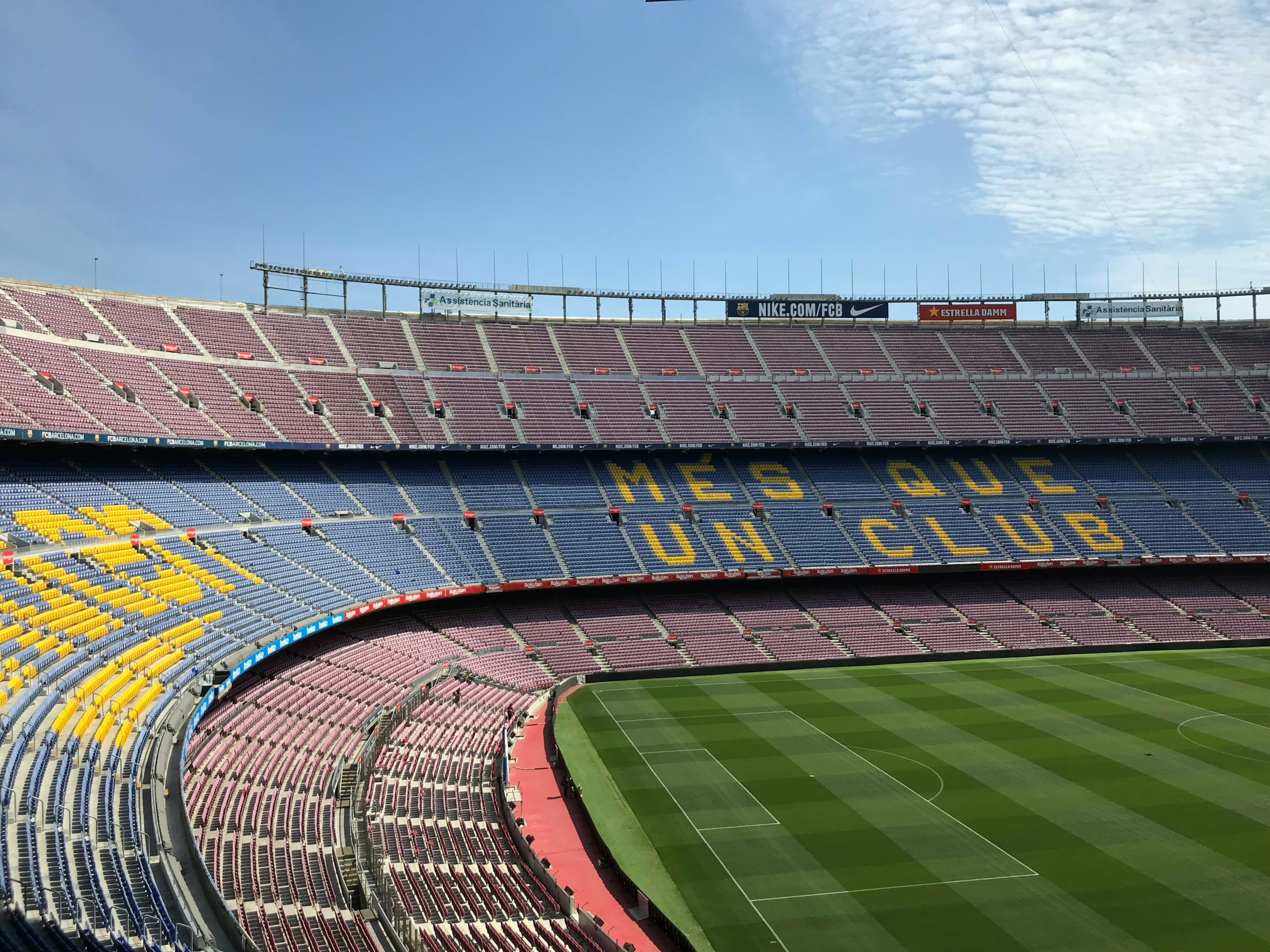
To truly appreciate Josep Lluís Núñez’s impact, a visit to Camp Nou and La Masia is essential. Discover the history, culture, and passion that define FC Barcelona by reading The Ultimate Barcelona Soccer Travel Guide. Explore the story of a club that is truly “més que un club.”
Team Soccertrippers
We combine official club and venue sources, current travel data and clearly labelled community input. When a detail is not first-hand or cannot be confirmed, we do not present it as our own experience.
How we research and verifyFree personalised planning pack
Plan your Barcelona football trip
Receive the checklist plus relevant ticket, hotel and matchday advice for Barcelona.